
Hazelwood City Directory Collections
Hazelwood does not have a confirmed city-issued historical people directory. The useful shelf is the St. Louis County directory run held through St. Louis County Library, paired with the library's Hazelwood local-history index and other dated research collections. The County volumes are not a seamless run, and a directory's place label can be older than present city boundaries. For household history, retain the printed year, the edition, the page or image, and the place wording exactly as it appears.
| Collections | Years | Where Held | Access |
|---|---|---|---|
| St. Louis County directories | 1893-1979, with gaps | SLCL Digital Archives, print, microfilm, and microfiche | Name or address search, then page browsing |
| Hazelwood history index | 1992 publication | SLCL History & Genealogy | Targeted lookup by name, subject, page, or photograph note |
| County deeds and ownership index | Deeds 1877-1931; ownership index 1974-1992 | SLCL PastPorts, History & Genealogy, and Recorder routes | House and address research, with Recorder confirmation |
| Federal Census | 1950 public; later releases follow the 72-year rule | Census and NARA research routes | Dated household and address geography |
The SLCL County directory archive is the practical first stop for a year-specific search. Its captured screen is shown below. It supports choosing a year, searching a name or address, and opening page images when the search text misses a printed entry.
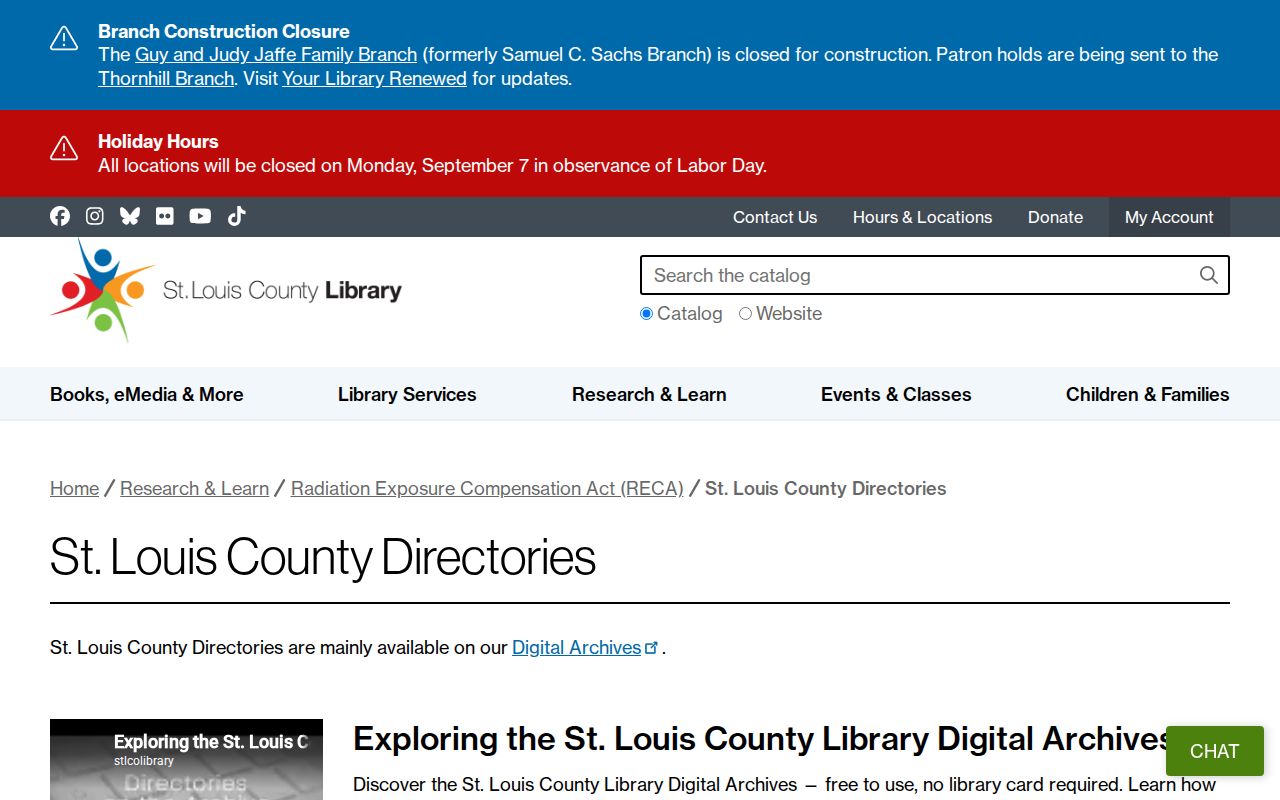
Page browsing is essential because optical character recognition can miss initials, faded type, abbreviations, and unusually printed surnames.
Hazelwood City Directory Years
The documented County holdings begin with 1893 and include 1896, 1903, 1909, 1917, 1920, 1922-23, 1930, 1932, 1934, 1936, 1938-39, 1941, 1943, 1946, 1949, 1953, 1955, 1957-59, 1961-71, 1972-76, and 1979. Those dates identify holdings, not proof that a directory covered every present-day Hazelwood address or household in every edition. The list was documented in a 2016 holdings resource, so a current catalog check is sensible before arranging a visit or requesting a volume.
The gap pattern is useful evidence. Compare entries ten to twenty years apart when a household is hard to follow. A surname that appears once can be an abbreviated listing, a short stay, or a search error. Repeated address entries form a stronger historical pattern. The last documented County edition is 1979, so later local questions need another dated source rather than an assumed continuation of the directory series.
Note: The earliest located County directory is not the beginning of all records for the Hazelwood area.
Hazelwood City Directory Search Methods
Begin with the spelling found in a family document, then try an initial, a spouse or widow notation, and a nearby year. In the digital archive, select St. Louis County Directories, choose an edition, search the name or address, and inspect the page image. The printed alphabetical section is often the best confirmation. When the household is known by address, test that address in the selected scan before assuming a reverse volume exists.
The Library of Congress distinguishes an ordinary city directory from a street-address or criss-cross directory. Hazelwood has no confirmed digitized reverse or criss-cross volume for a specific year. Ask SLCL History & Genealogy whether the chosen edition includes a street section, and browse it if the scan offers one. A failed text search should lead to a page-image check, not a conclusion that the person was absent.
The Library of Congress city-directory guide shows the categories used in historical directory research. Its image below reinforces why the collection's title, edition, and address arrangement matter before a search result is interpreted.
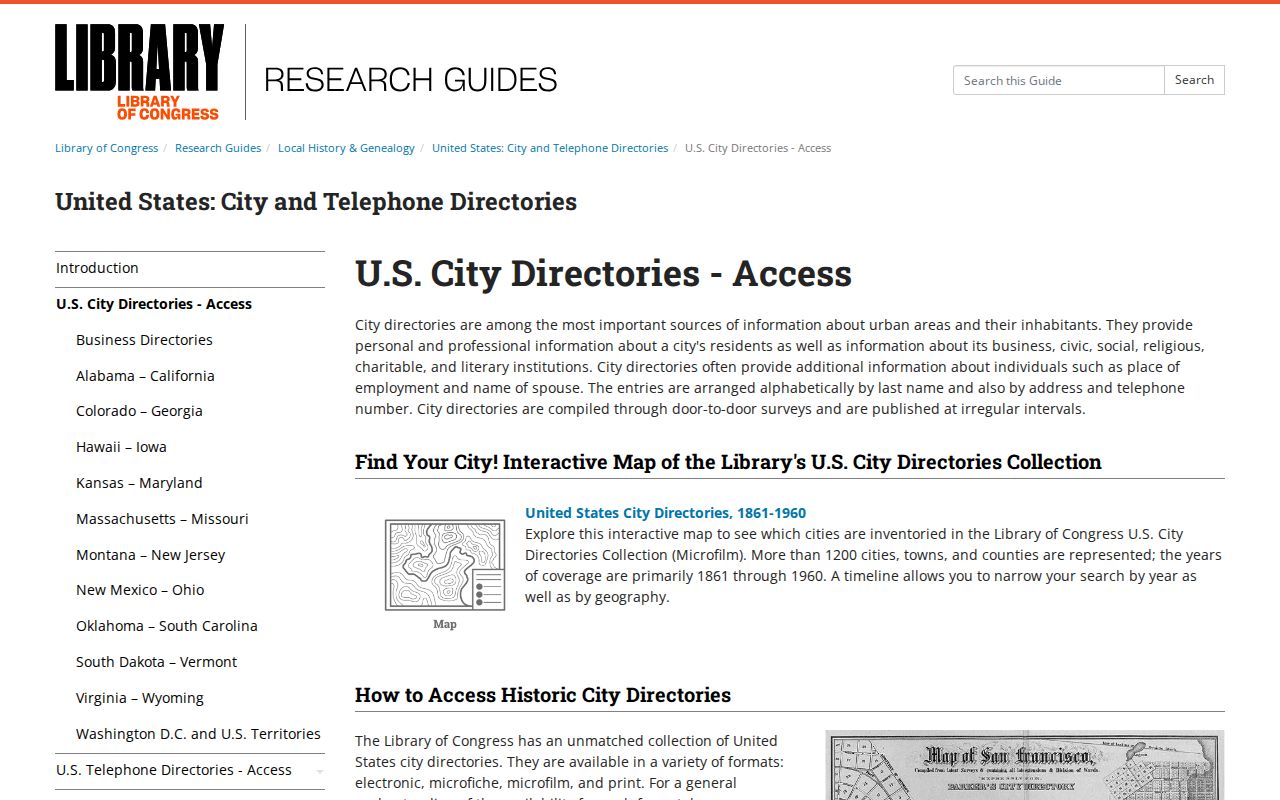
Street-address, telephone, business, and ordinary directory formats answer different questions, so their entries should not be treated as interchangeable.
Hazelwood History Index Clues
SLCL's local-history index centers on The City of Hazelwood: The Past Forms the Future, published in 1992 and cataloged as R 977.865 C581. It indexes names, pages, photographs, and subject notes. The indexed material includes references to the Ford plant, the Little Red Schoolhouse in 1924-25, police personnel in 1972, city history, and boundary material after May 5, 1992. A page or photo note is a lead to inspect, not proof that a person lived at a particular address.
History & Genealogy lookup requests are usually limited to three searches. Give the exact name, book title, page, topic, or date when it is known. The Hazelwood local-history index is pictured here. A focused request gets closer to the source than asking staff to construct a broad people list.
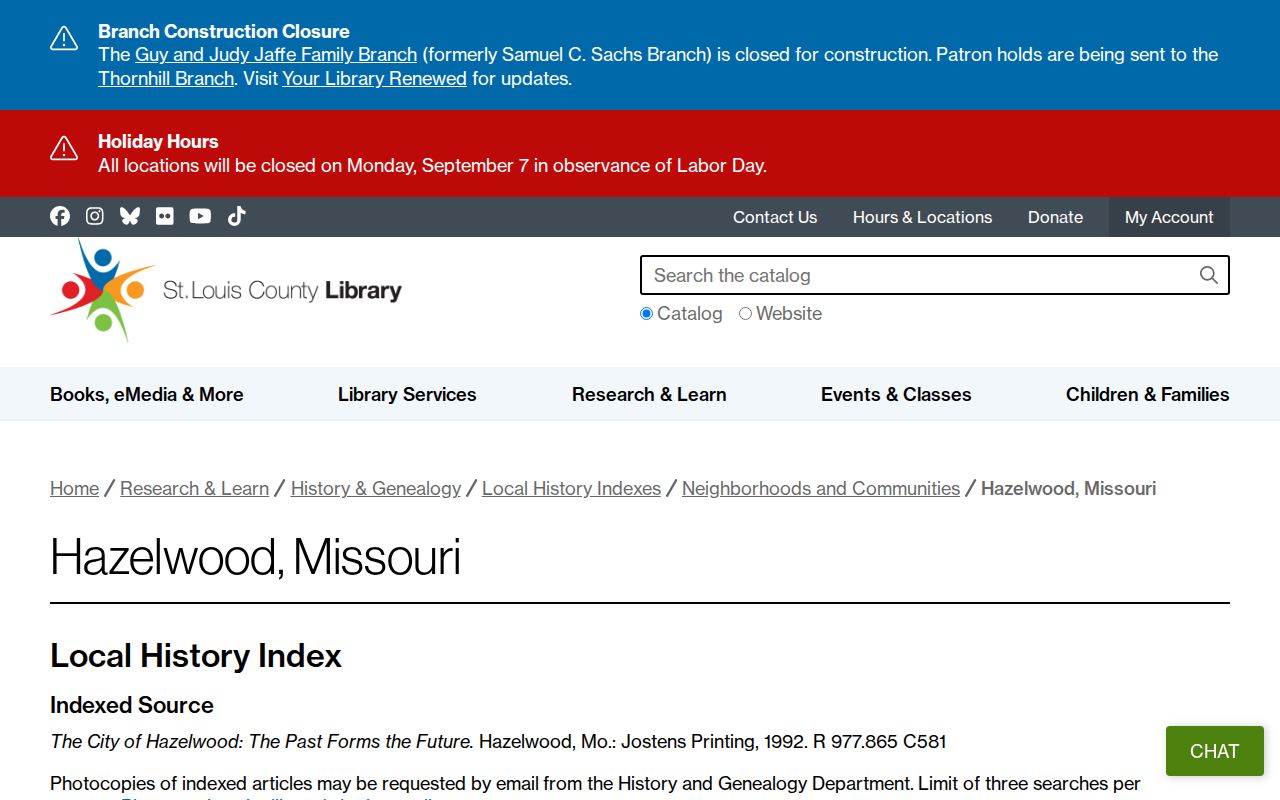
The index works especially well when an old directory provides a surname, a civic event, or a page clue that can be checked against a local history source.
Reading Hazelwood City Directory Entries
A directory entry is a printed observation for one edition, not a full identity record. The accessible research did not expose a stable, named Hazelwood-area entry with every field for a sample transcription. Preserve only what the actual page prints. Common directory conventions can include a name, address, telephone or business line, and relationship notation, but their presence varies by year. Photograph or note the edition's abbreviation key before expanding a shortened word.
| Name as printed | Record initials, spelling, suffixes, and the exact line order rather than silently modernizing them. |
|---|---|
| Address or location | Keep the house number, street wording, postal or County label, and any apartment or business detail shown. |
| Relationship notation | A spouse or widow marker can be a genealogy lead, but it should be compared with another dated source. |
| Business or telephone line | It can distinguish similarly named people, yet it does not establish a current residential connection. |
| Edition citation | Save the year, publisher or collection title, page or image number, and the OCR quality. |
- Criss-cross directory
- A directory arranged by street address rather than by surname. Its presence and coverage vary by edition.
- Householder index
- An index focused on the named household entry. It may omit other people associated with an address.
- Abbreviation key
- The volume's explanation of shortened terms and symbols. Read it before interpreting a notation.
Hazelwood Directory Library Holdings
The SLCL city-directories service combines digital and physical research routes. Digital access is useful for a quick comparison, while print, microfilm, or microfiche may be necessary when a title has not been scanned or an image needs close inspection. Fragile paper directories may not be freely copied, so capture the citation and ask about the library's available reproduction options.
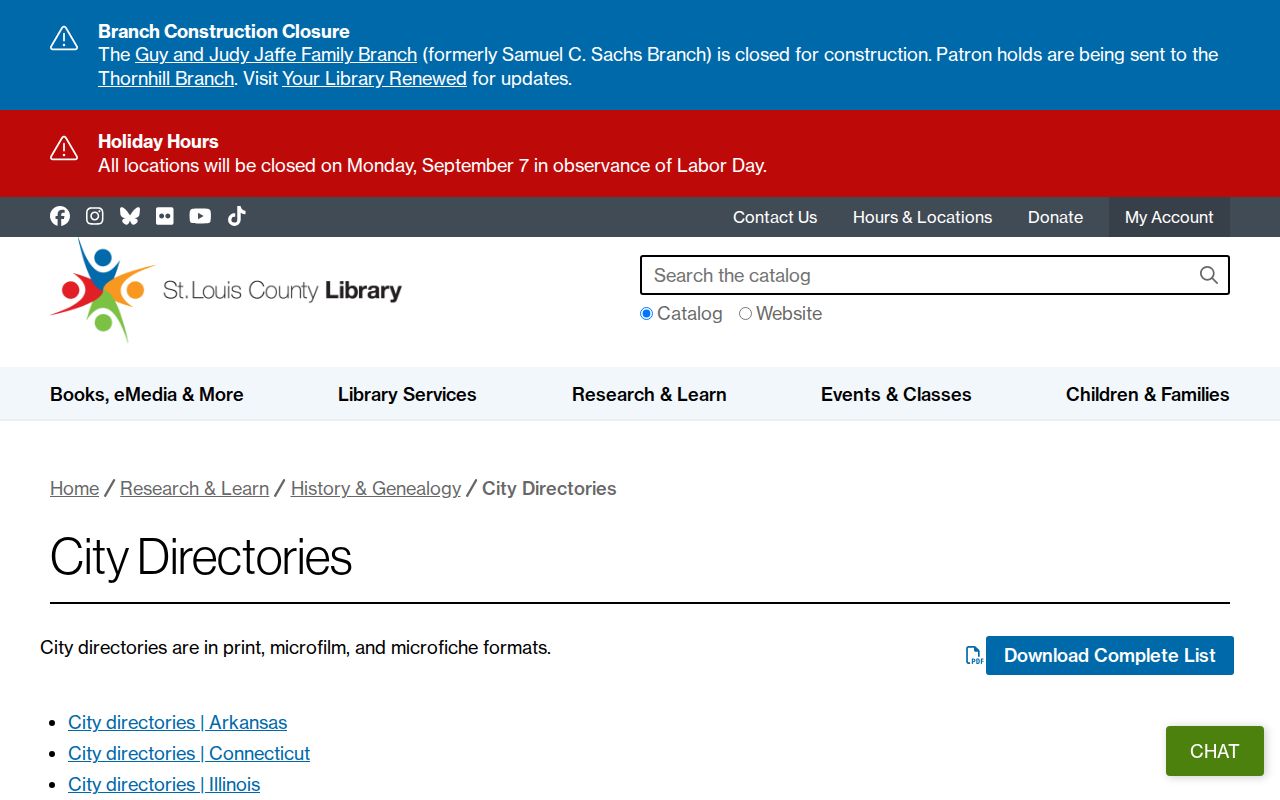
Using both the archive and the library route keeps a missing digital scan from becoming a dead end.
In 2024, St. Louis County Library opened the Clark Family Branch with the Emerson History & Genealogy Center, a Memory Lab, digitization space, six FamilySearch screens, and about 125,000 items. That is a useful regional option for fragile family papers, directory citations, and house-history questions that require more than a keyword search.
Tracing Hazelwood City Directories
Follow a household through dated editions, then pair each interval with released Census material. The goal is not to fill every gap with an assumption. It is to create a trail that records what each source actually observed. A change in address, spelling, or place label should be noted before it is explained. If the trail moves into a property question, the modern address-record sequence belongs on the Hazelwood street address directory page.
- Find the earliest located directory entry and record its edition, page, address wording, and search method.
- Check nearby listed years, including a browse of the page image when an OCR search is blank.
- Compare the same name, address, and place label against the released Census year nearest to the directory entry.
- Use a newspaper or obituary citation to test whether a disappearance reflects a move, death, name change, or an incomplete volume.
- Mark the result as a dated directory entry, not an unqualified statement that the household remained there.
The Census release schedule matters. The 1950 Census became public on April 1, 2022, and 1960 is scheduled for 2032 under the 72-year rule. A Census household can provide age, relationship, birthplace, marital status, and geography, but it should be preserved as a Census observation for that release year.
Hazelwood Directory Companion Sources
Directories become stronger when a second source confirms the same year and role. SLCL's newspaper and obituary resources cover titles including the Post-Dispatch, Globe-Democrat, Republic, Star-Times, Westliche Post, and County Watchman-Advocate. An obituary lookup needs a death date or exact citation, and an article lookup needs a precise citation. Save the newspaper title, date, page, and index wording.
FamilySearch's Missouri County Marriage, Naturalization, and Court Records collection covers 1800-1991, although image access and indexing vary. It may supply a marriage, probate, or naturalization lead that explains a name difference in a directory. Missouri State Archives also offers a county and municipal records finding aid by office type, record type, city, keyword, and year range. Neither route is a universal Hazelwood resident index.
Note: A directory line, a Census household, and a recorded deed can describe different roles at the same address.
Hazelwood Directory Place Labels
Older records may use a County, township, postal, or unincorporated label for land later associated with Hazelwood. The city history records a farmer organization in 1944, incorporation on September 7, 1949, the first Board meeting on September 26, 1949, a charter effective April 7, 1970, and the move to the current Elm Grove City Hall site in June 1984. Those milestones explain why the same area may sit in different administrative settings across directory years.
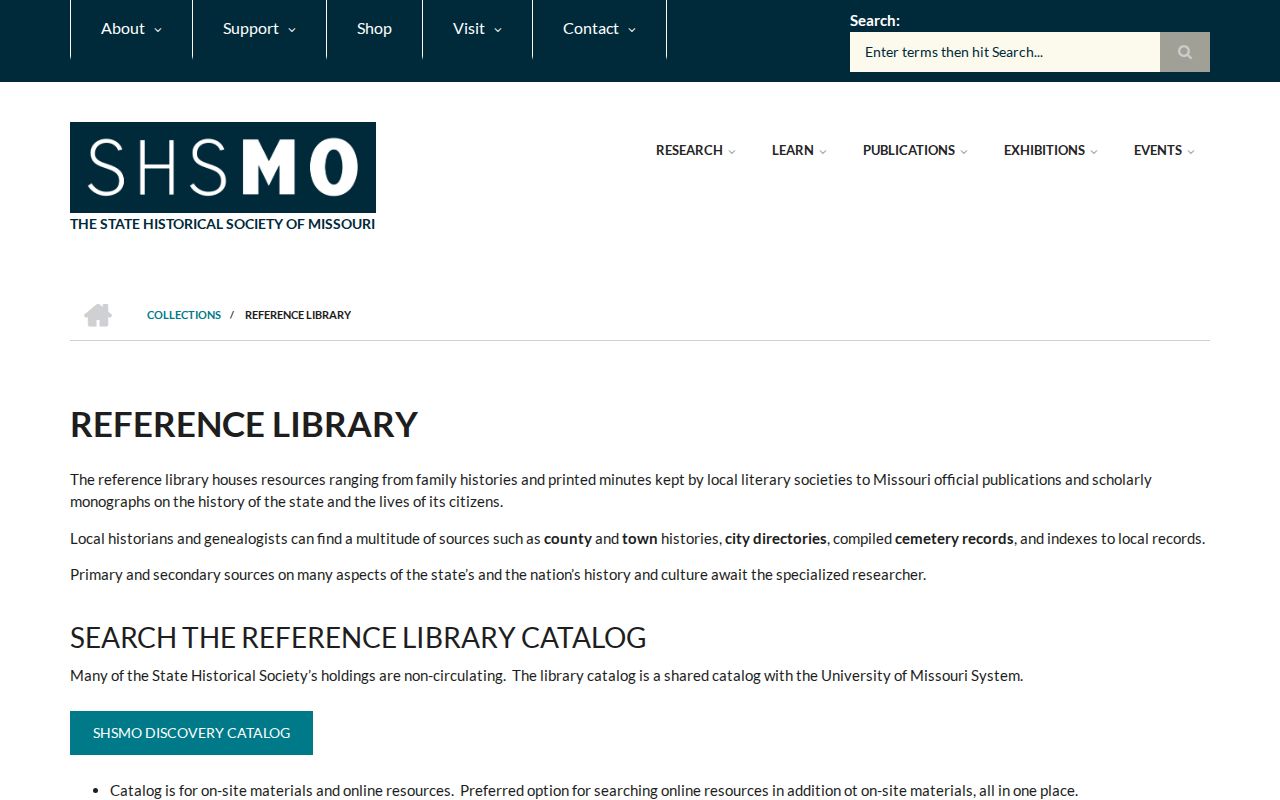
The Missouri State Historical Society reference holdings include county and town histories, directories, cemetery records and indexes, local records, and subject files. The captured holdings page appears below. Its Missouri Digital Heritage directory collection demonstrates searching names, places, addresses, and dates, but the surfaced digitized collection was Hannibal-focused, not a verified Hazelwood directory.
Confirming the place and year keeps a regional catalog result from being mistakenly presented as a Hazelwood household record.